Thursday, June 23, 2016

Official "History"


Recently while on a trip to Washington, D.C. and NYC with my wife, I was painfully reminded about how "we" and even official "historical" tour guides romanticize about (while perpetuating fairy tale myths) and attempt to sanitize American History.


Top 5 "truths" (believe me there were more than 5...in no particular order) heard (or not heard...ignored) on the trip:


1. While standing at the foot of the Lincoln Memorial and hearing dozens (including teachers with student groups) repeat the mantra of "Lincoln as The Great Emancipator...the Savior of the slaves, etc." while having no clue of his plans of colonization, his racist rhetoric and tone, etc. while hundreds trampled over (without notice or recognition) the plaque commemorating the place where Dr. King delivered his famous "I Have a Dream" speech.

2. While visiting Teddy Roosevelt's home at Sagamore Hill (actually a great tour)...the tour guide throws in (IMO to placate the people of color) during the last 5 minutes of the tour how progressive President Roosevelt was on race because "he was the first President to invite a black man to dinner at the White House."

But, what about Roosevelt's belief in racial eugenics, referring to Africans as, “ape-like naked savages, who prey on creatures not much wilder or lower than themselves" and stating that whites were “the forward race destined to raise the backward race[s] through industrial efficiency, political capacity and domestic morality"...his implicit cover-up of contributions of the Buffalo Soldiers during the Spanish American War, etc.

3. A tour guide at Arlington National Cemetery referring to Robert E. Lee as a "great American general" whose property was "rightfully returned to the Lee family in December of 1882 on a 5-4 U.S. Supreme Court, in a 5-4 decision" which stated that the  confiscation of the property lacked due process...."and Congress eventually purchased the property from Lee for $150,000."

All this without one mention of Lee being a traitor, Freedmen's Village and the thousands of slaves who fled, lived, died, and were buried at Arlington during and after the war...no mention of Medgar Evers or many other important people of color and women buried at Arlington.

4. The same tour guide at Arlington National Cemetery giving a very cursory and inaccurate history of the Iwo Jima Marine Memorial without a mention of the first flag raising, cost of life for government propaganda, etc.

5. Listening to a tour guide eulogize Thomas Jefferson and his "great belief in freedom and all men are created equal" while failing to note that TJ owned slaves, raped Sally Hemings, called Native Americans "Noble Savages", etc.


As Edourd Glissant suggests...


If only we dared "to abandon the absurd catalogue of official history".


Saturday, June 11, 2016

Literacy = Freedom


IMO, WE MUST BEGIN TO READ AND NEVER STOP!

Not an unusual story across our nation...

Mary Willingham (a learning specialist and tutor) was in her office when a basketball player at the University of North Carolina walked in looking for help with his classwork. He couldn't read or write...even about himself in the local sports page!

"I kind of panicked. What do you do with that?" she said, recalling the meeting.

Willingham's job was to help athletes who weren't quite ready academically for the work required at UNC, one of the country's academically elite public universities. But she was shocked that one couldn't read or write.

And then she found he was not unusual:

35% of Americans read below a 5th grade level.

19% of high school graduates (how did they graduate...is this immoral?!?) can't read...This is on top of the fact that 22% of students nationwide do not graduate from high school.

An estimated 20% of college athletes read below an 8th grade level.

33% of high school graduates never read another book after high school.

In the USA, the average person spends 4 hours per day watching television and less that 20 minutes reading.


One of the functions of The National Association of Adult Literacy is to measure the English literacy of adults across the United States. They define literacy as the ability to “search, comprehend, and use information from continuous texts,” and categorize literacy into four levels:


Below Basic- the most simple skills ranging from non-literate to being able to follow simple written instructions. (14% of population)


Basic- the ability to perform simple everyday literacy tasks like reading and understanding simple texts and documents, being able to read the TV schedule, etc. (29% of population)


Intermediate- the ability to summarize, make simple inferences, compare and contrast, determine the author's purpose, locating information in complex reading materials, identifying locations on a map, etc. (44% of population)


Proficient- skills to perform moderately challenging and complex literacy  such as reading lengthy abstract prose, integrating, synthesizing, and analyzing multiple pieces of information, making inferences, etc.


In an extensive NAAL survey, only 13% of adults attained the proficient level (compared to estimates of 20% in 1776).


We must do better...these statistics are an unacceptable truth!


How to improve your reading:


1. Find something interesting to you and at or slightly above your current reading level.


2. Find a quiet place where you can read.


3. Have a regular routine/ schedule to practice your reading.


4. Take your time, concentrate, sound out words, look up difficult words (it is a good idea to read while listening to the audio version...this especially helps for pronunciation).


5. Determine context clues, implied messages, symbolism, etc...read and reread if necessary.


6. Keep reading...soon your vocabulary will become larger and more sophisticated, your ideas and imagination will broaden, and you will notice your grades change for the better in school. You will also become a better writer due to your more advanced vocabulary.


7. Have fun...because reading is fun!


Some of the books I plan to read this summer!


Tuesday, June 7, 2016

My Top 20 "Summer" Songs

As another school year ends (my 31st in teaching)...I share with you my very subjective  "Top 20 Summer Songs".


Enjoy and let me know what I "forgot"!


1. Everybody Loves the Sunshine...Roy Ayers


2. Summertime...Ella Fitzgerald & Louis Armstrong


3. We Don't Need No Education...Pink Floyd


4. Dancing in the Street...Martha and the Vandellas


5. Feeling Good...Nina Simone


6. Hot Fun in the Summertime...Sly and the Family Stone


7. Heatwave...Martha and the Vandellas


8. Lovely Day...Gil Scott-Heron


9. When the Levee Breaks...Led Zeppelin


10.Fire and Rain...James Taylor


11. Bicycle...Queen


12. Schools Out...Alice Cooper


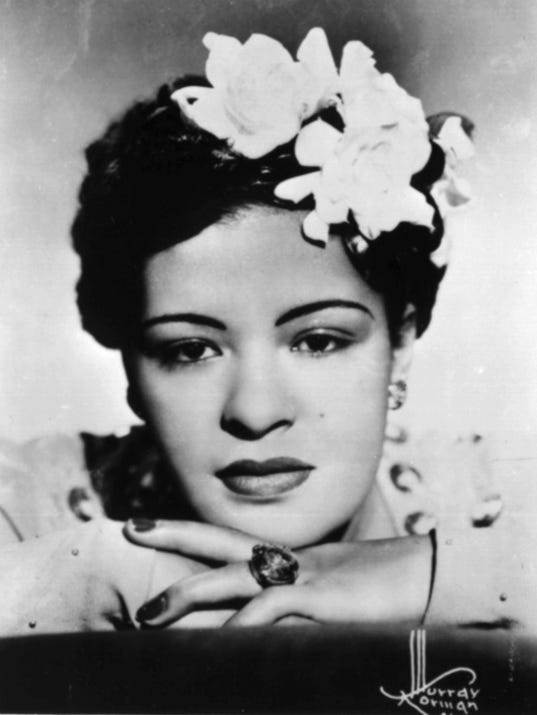
13. Gloomy Sunday...Billie Holiday


14. Sun is Shining...Bob Marley


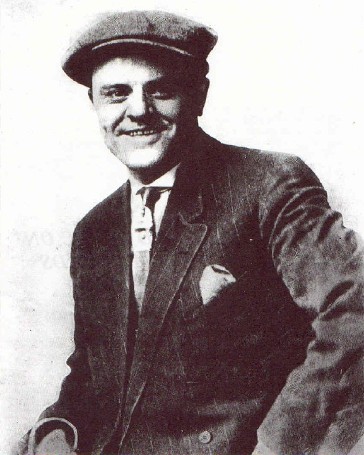
15. In the Good ol' Summertime...Billy Murray


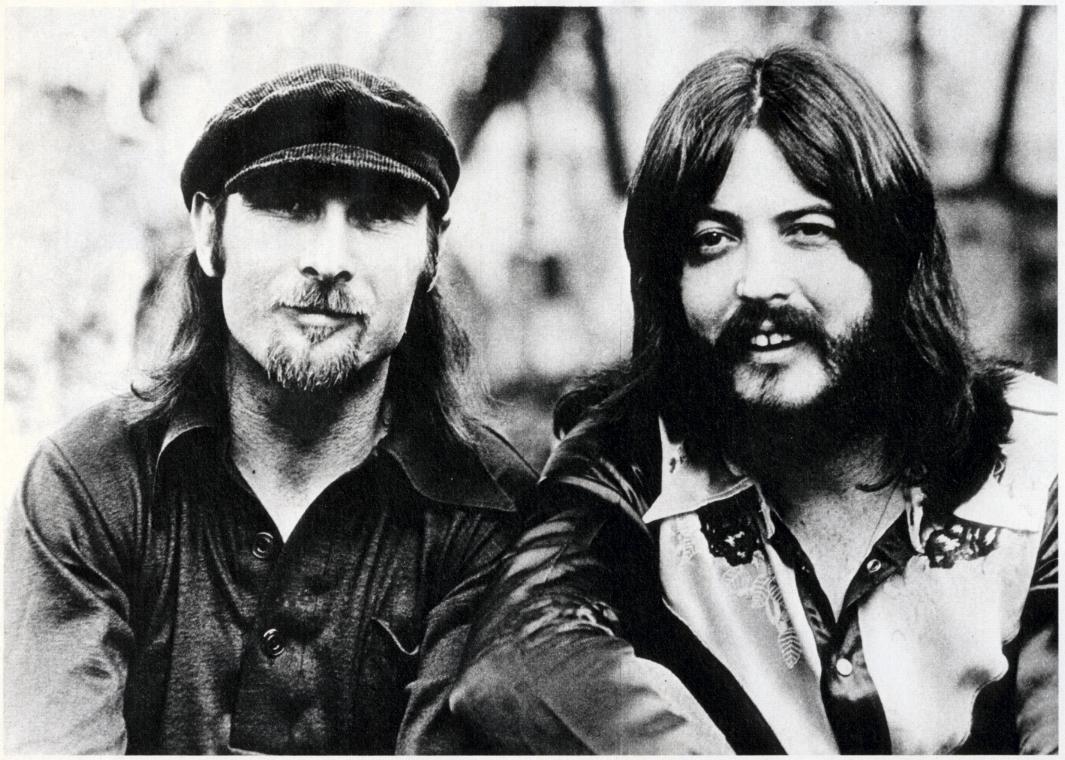
16. Summer Breeze...Seals & Crofts


17. Dog and Butterfly...Heart


18. Everday Sunshine...Fishbone


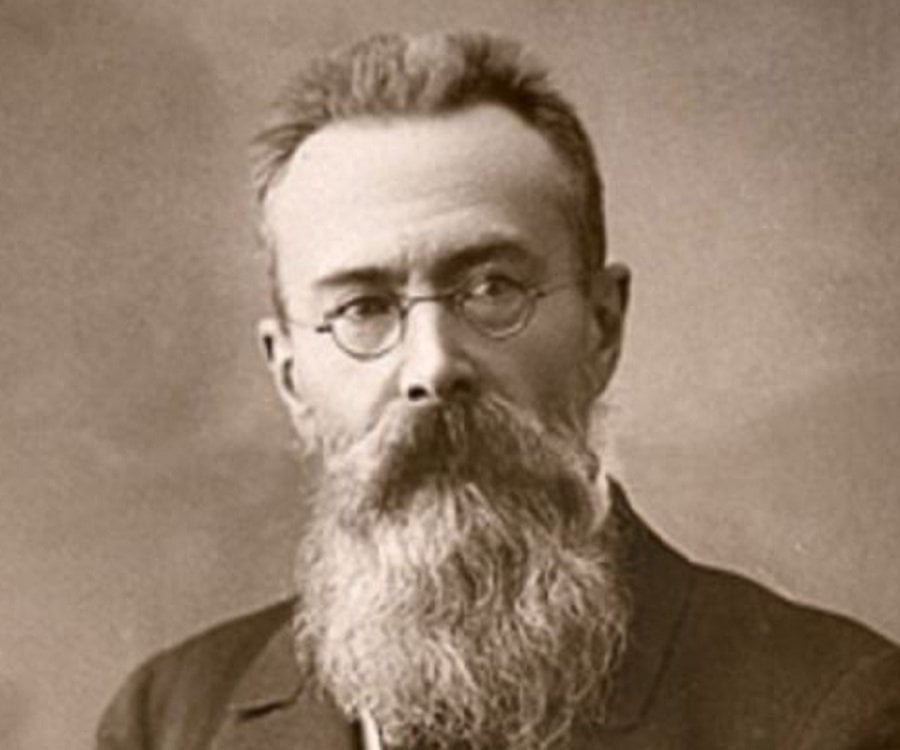
19. Flight of the Bumblebee...Nikolai Rimsky-Korsakov


20. Moonlight Sonata...Ludwig van Beethoven


Friday, May 27, 2016

Meditation


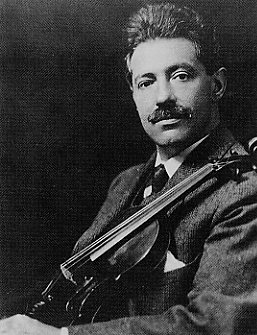
Last summer as my wife and I were waiting for a train to arrive in a NYC subway station...a street performer (actually a virtuoso violinist) began to play Meditation from Jules Massenet's French opera Thais (you may have to do a Wikipedia search to research the basic plot/ meaning behind this story). Basically, in this part of the opera Thais (a beautiful prostitute) is pondering her past life and the struggles/ choices between good and evil she faces in her future life.


As I "meditate" on our year together in US History, I often wonder if this learning has made a difference...


Has it just been a bunch of stories while students daydream, text, sleep, etc. and take a few multiple choice tests?

Do they understand what I'm really trying to teach them?  Do they care?

Have I helped them to see the forces behind what drives history?

Can they recognize ISMS in "The Matrix" of past/ current events and fight against them?

Have they strengthened their power of agency and voice?

Are they willing to "use their feet" to be a socially conscious/ active person with deep empathy and passion for equity, justice, etc.?


Close your eyes and listen... 
to (Austrian violinist) Fritz Kreisler's rendition of Meditation.


The juxtaposition of Meditation being played with nearby trains rumbling past/ drowning out pieces of the song deeply moved us both...the beauty of the song at that moment brought us to tears.


I hope the beauty of learning (while hearing the clashing noises of history, current politics/ racism/ injustices, etc.) will cause you to meditate deeply and stir you to know the universe of your dreams! 


Thank you for a great year...


Thursday, May 19, 2016

Why Are You Studying?

I know this is a US History blog, but...


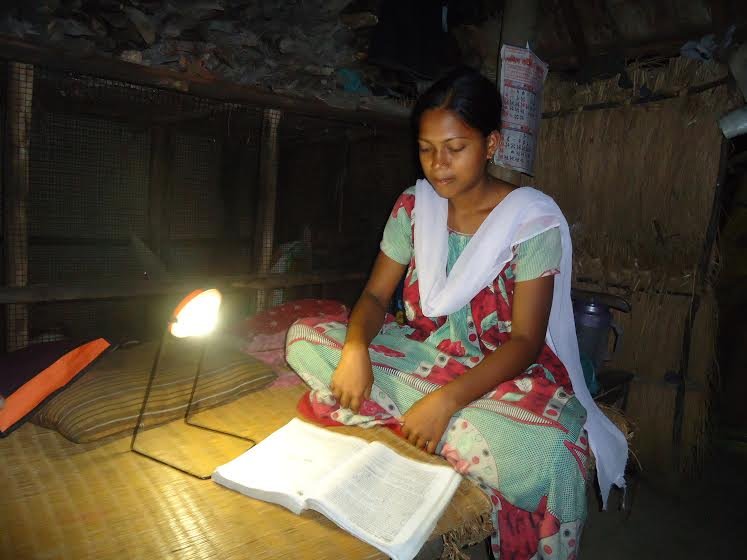
The Sundarbans are a remote area of the largest mangrove forests in the world. Solar power arrived in local villages approximately 5 years ago and began to change the way life had been lived for decades...especially the ability to have lighting during the nighttime hours.


A teenager shares through an interpreter:

"Before, I couldn't study at night because we only had kerosene lamps. They were dim, and there wasn't always enough oil to keep them lit."

She was then asked, "what do you want to be when you grow up...why are you studying...what do you hope your life will be?"

"I want to serve human beings."


As (privileged and may I say spoiled) students all around the United States prepare for finals and the end of another school year, I hope that their learning has taught them to:


  • Think more critically
  • Develop Voice and Agency
  • Recognize and call out "isms" and systems of oppression 
  • Build empathy and a strong social consciousness
  • Appreciate the struggles/ fight/ sacrifices for freedom of previous generations 
  • Stand up and fight for what is right
  • Consider living their life "to serve human beings"


Friday, May 13, 2016

Be Proud, Stand Up, Fight!

     
Dr. Clarence Taylor

During the summer of 2011, I had the opportunity and honor of attending a Gilder Lehrman Teacher Seminar in New York City taught by Dr. Clarence Taylor.  The purpose of the seminar was to examine the origins of the Civil Rights Movement (CRM) and Black Power Movement (BPM) and their impact on American society.  Little did I know that this seminar would lead to meeting Civil Rights royalty!


The lectures, day trips, and personal excursions led to many thought-provoking conversations among members of our cohort.  Of course, the best and sometimes heated discussions took place as we enjoyed our time together eating meals, hanging out in Washington Square, riding the subway, and lounging in the dorms at NYU. 

One day as we were discussing the “classic narrative of Rosa Parks,” I exclaimed to my lunch companions, “This afternoon I am going to find and visit Claudette Colvin.” 

They asked, “Who is Claudette Colvin?” 


After a “brief” explanation, I got reactions ranging from, “You are crazy,” and “You are wasting your time” to “Can I go with?” and “I can help you get there.” 
So off we went (5 of us) to find Claudette Colvin.  After a hopeful 45 minute subway ride (where we discussed our “strategy” and rehearsed questions we would ask) and a 15 minute walk to Miss Colvin’s building, we anxiously stood in front of the security camera and buzzed what we believed was her apartment number.

“Is this her?” and “Will she talk to us?” were the nervous questions we asked each other.  Buzzing.  Buzzing.  “Hello, who is it?” asked a surprised and tired sounding voice.  Obviously, she wasn’t elated that 5 strangers had arrived at her building.

 Ashley and Sheila revealed the reason for our unexpected visit.  “Miss Colvin, we are a group of teachers from around the country in New York to study the Civil Rights Movement, and we would really like to talk to you about your experience.”

“Not today, maybe another day,” a reluctant voice responded.
     
I then explained, “Miss Colvin, this is our only opportunity.” I quickly repeated much of the history of Claudette Colvin, my travels and experiences in Montgomery, my wife’s family connection from nearby  Evergreen, and “what a dream this was just to be speaking with her.”  I don’t think she believed we were teachers legitimately hoping to talk with her. 
     
Then, shockingly she stated, “O.K. you can come up but only for 5 minutes.” 
     

The 11 story elevator ride was filled with exhilaration, trepidation, and the wonderful smells of ethnic cooking permeating throughout the elevator shaft.  We anxiously arrived at Miss Colvin’s door and knocked. She opened the locked door just a crack and quietly said, “Not today, today’s not a good day, I’ve been resting and my place is a mess.”  At this point we all began pleading, trying to convince her just to answer a few questions “for our students.” 

She was apprehensive and asked for a few minutes to brush her hair.  She reluctantly returned and invited us into her home.  The 5 minutes turned into an hour! We were entertained with Claudette’s wide ranging stories, memories, and photographs of growing up in Montgomery, the love she had for her father (family), her school days, her love of football, her tremendous anger and bewilderment about the Jim Crow south, racism within the African-American community, her move to New York City, her work in a Jewish Nursing Home, her friendships with all types of people, some of her favorite Hollywood movies,  and her grandson (a Washington University Medical School graduate working as a doctor in Chicago).  Miss Colvin even gave autographed copies of her book to several members of our group.  Toward the end of our visit, we asked her what advice she would like to share with our students from her experiences.  


She advised us to urge our students to be proud of who they are, stand up for what they believe, work hard in school, and take advantage of the opportunities provided today that she didn’t have.  She ended with guarded optimism that America would get better if we, “Continue to fight for Civil Rights.”


Sunday, May 8, 2016

"Anti"-Mother's Day

Anna Jarvis
1864-1948

In 1905, the year her mother (Ann Jarvis) died, Anna Jarvis started a campaign to make Mother's Day a nationally recognized holiday. Ann Jarvis had been a Civil War peace activist who cared for injured soldiers and later created a Mother's Day Work Club devoted to addressing public health issues and Civil War reconciliation.


Anna's original idea was that Mother's Day (to honor her mother's vision for Mother's Day community service) should be a day of simple family gatherings to rest, appreciate and honor their mothers through warm expressions of gratitude/ affection and deliver handwritten letters. Her hard-fought campaign was eventually successful and in 1914 President Woodrow Wilson set aside the second Sunday in May as our national Mother's Day. 


Unfortunately, the holiday quickly became commercialized by greeting card companies, flower shops, and candy makers.  Anna felt that her idea of a "Simple" Mother's Day had turned into a day of commercialized profit and easily purchased, inconsequential gifts.


Estimated Top 5 $$$ Holiday Spending

1. Thanksgiving/ Winter Holidays: $675B
2.  Back to School "Holiday": $80B
3.  Mother's Day: $25B
4. Valentine's Day: $20B
5. Easter: $17B


"Mom, Happy Mother's Day 2016!"

Jarvis became resentful and spent the rest of her life boycotting Mother's Day and was even arrested (disturbing the peace) in 1925 for protesting against the wanton commercialization of the day...


I wonder how she would react to 2016? 


KEEP MOTHER'S DAY SIMPLE!