Monday, October 10, 2016

Abolish Columbus Day!


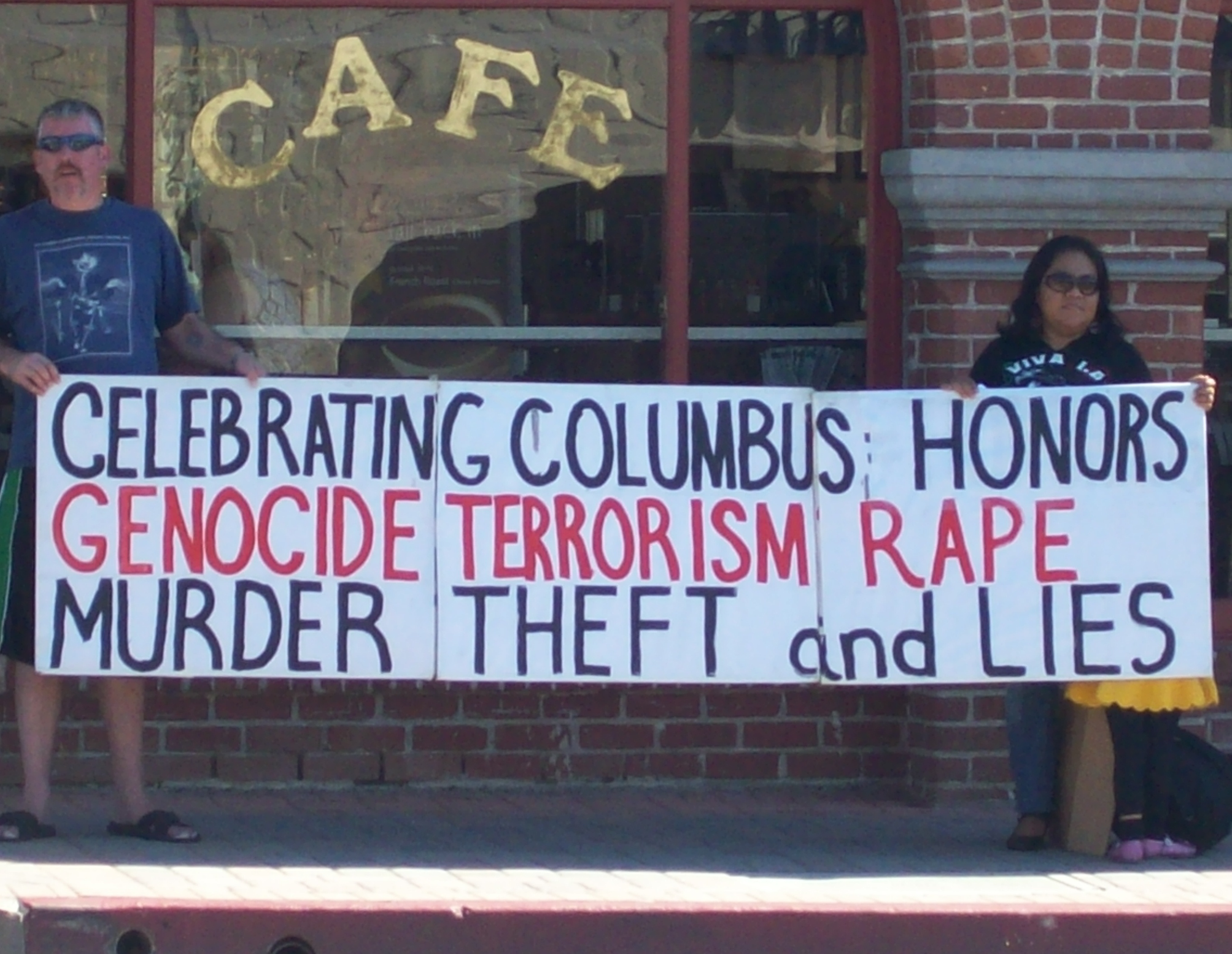
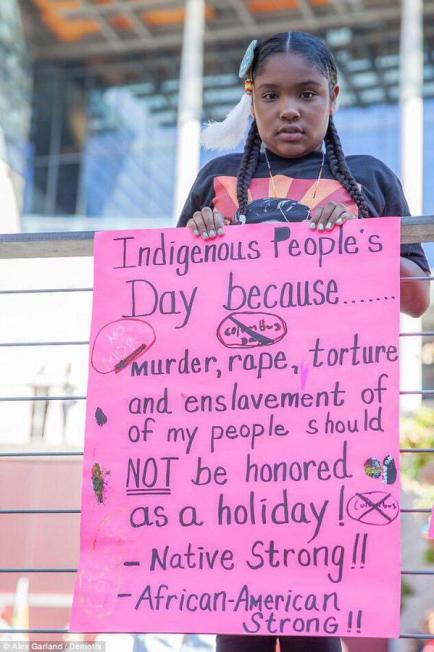
Over the past decades, many cities across the United States have followed the lead of the state of South Dakota (circa 1990) and replaced Columbus Day with Indigenous Peoples Day.

There are many reasons to not celebrate the "legacy" of Christopher Columbus:


1. Many historians are not sure that Columbus was even a gifted explorer...the Nino brothers are probably the ones who should get the credit for guiding these journeys.


Pedro Alonso Nino


2.  Even if I wanted to celebrate (which I don't) the first Europeans who came to the Americas, it would be Lief Erikson, not CC.

Columbus never set foot in North America.


3. The westward invasion that accelerated after Columbus' "discovery" led to one of the most brutal genocides in the history of the world...they flogged, slaughtered, raped, burned alive, enslaved, etc. all while laughing/ making sport and getting rich from their takeover.


Tuesday, September 20, 2016

Freedmen's Village


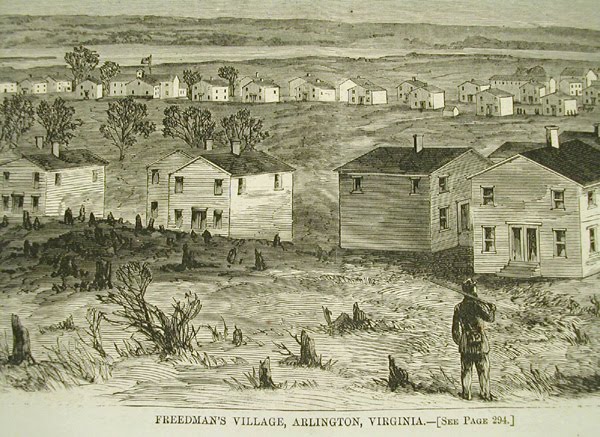
Over 1 million people per year visit Arlington National Cemetery, but very few who visit realize that a camp of former slaves (contraband of war) lived on these grounds (the former plantation of Robert E. Lee) as free people as early as 1863 and became known as Freedmen's Village...something our tour guide did not know or failed to mention!


Freedmen's Village was originally 50 houses that accommodated 2 families each, several schools and churches, a hospital, and an old folks home and was intended to protect slave refugees, train them in skilled labor, and begin to provide a formal education.  Eventually,  over 1,000 people called Freedmen's Village their home. Of course, many died here and are some of the small percentage of civilians buried at and near Arlington Cemetery.


Of course, this was not as idealistic as it sounds. Although slavery had been abolished in Union occupied territory, the North was not interested in blacks moving to northern cities.  Freedmen's Village was created by the government to prevent integration and freedom in order to keep Black people segregated.


Freedmen's Village was closed by the government in 1900 due to increased racial tension in the area, local business development, and the construction of the Potomac Bridge.

Are any of you thinking that this may have been the government's first gentrification program?!


No organized excavation of Freedmen's Village has ever been done, but parts of the cemetery were uncovered by recent construction (Sheraton Hotel) projects.

It is sad that the truth is not told at Arlington or deemed important by my tour guide...maybe someday the important lessons of Freedmen's Village will be more widely told (and government-sponsored racism/ gentrification will end.


Sunday, September 11, 2016

WE WILL NEVER FORGET


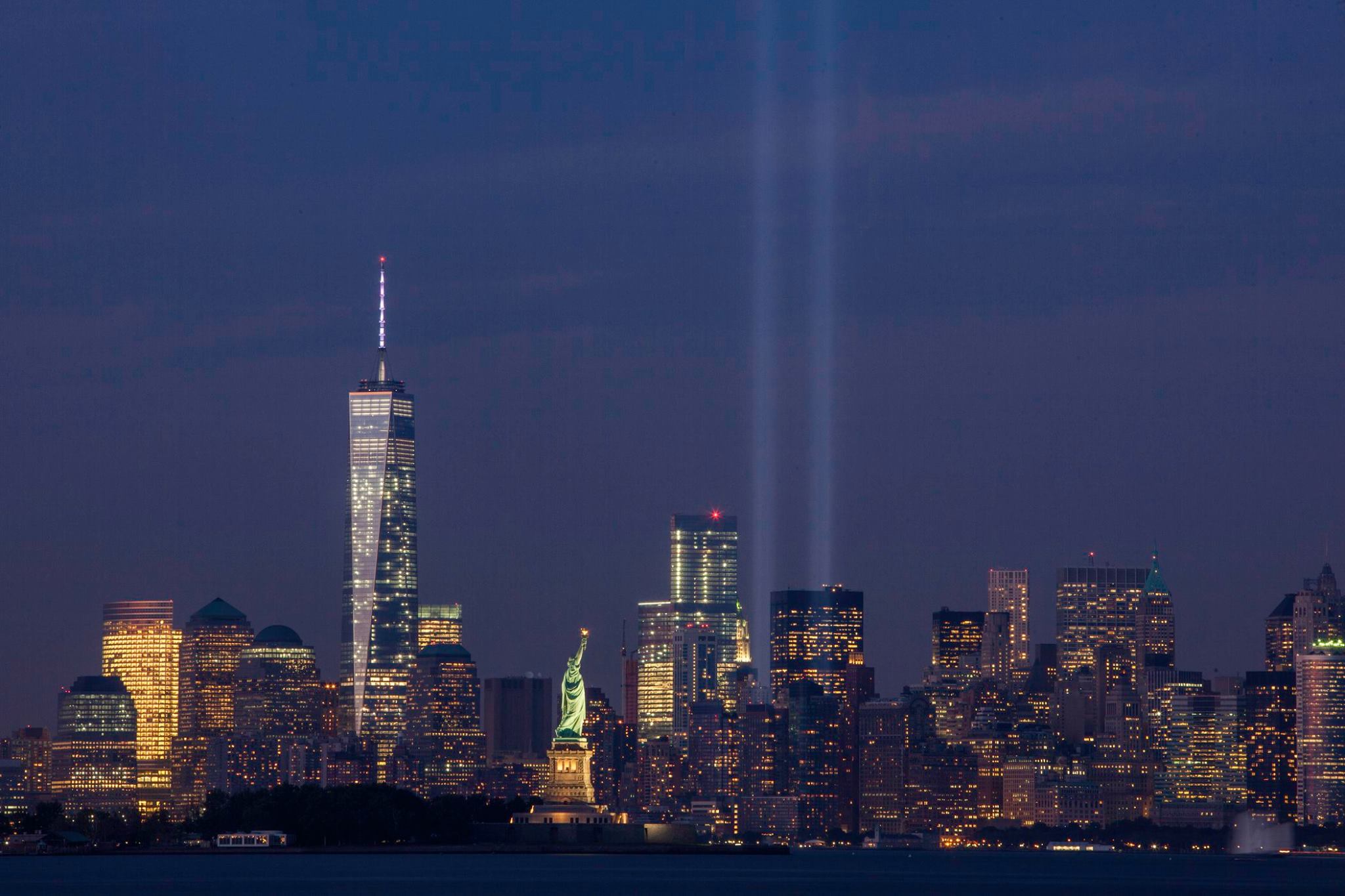
Names and water are what I contemplate when I visit the 9-11 Memorial...

Names:

Lives well lived...

Lives cut short...

The laughs and smiles...

The stories...


Water:

Sorrow and Tears...

Life...

Renewal...

A reminder to live each day to the fullest...

Questioning, how should I live...

A hope that we never forget...


WE WILL LIVE.


WE WILL LOVE.


WE WILL NEVER FORGET.


Monday, July 18, 2016

Fort Jay


Fort Jay is the oldest defensive structure on Governors Island, it is located on top of the original earthworks fortification constructed during the Revolutionary War to help defend New York.

During the Revolutionary War, the site was abandoned as the British overwhelmed the Americans in the process of their occupation of New York.  In the years following the war, the earthen works structure deteriorated and was eventually reconstructed in 1797 as a square structure with four corner bastions.

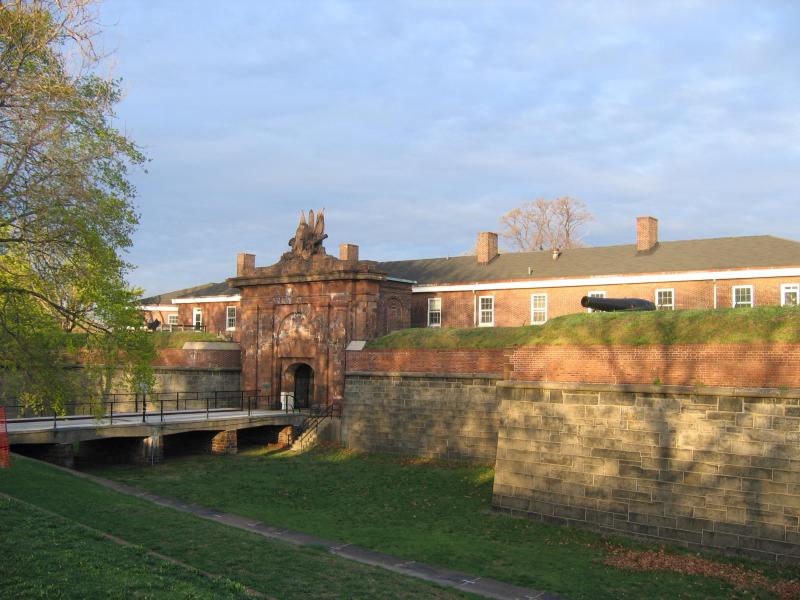
The entrance to Fort Jay

In the 1830's, the earthworks bastion was replaced with a star shaped sandstone and granite fort that was surrounded by a very high glacis (grassy area) and a deep, dry moat. Some of the dimensions/ features of the fort:

Elevation: Over 20 feet above sea level (the highest point on Governors Island)
Walls: 20 feet high and 8 feet thick
Dry Moat: 30 feet deep and 30 feet wide
Armaments: Over 100 large cannons


A Rodman Cannon at Fort Jay...so cool!


But, most interesting to me was the history of Fort Jay as a Civil War prison.  Unlike Castle Williams (previous post) which housed enlisted soldiers, Fort Jay was "home" to Confederate officers.  Generally speaking prisoners on both sides who were officers were treated relatively well. At Fort Jay, Confederate officers well allowed to walk around the island, play games like baseball for recreation, correspond through letters with their family members, and even fraternized with Union soldiers.


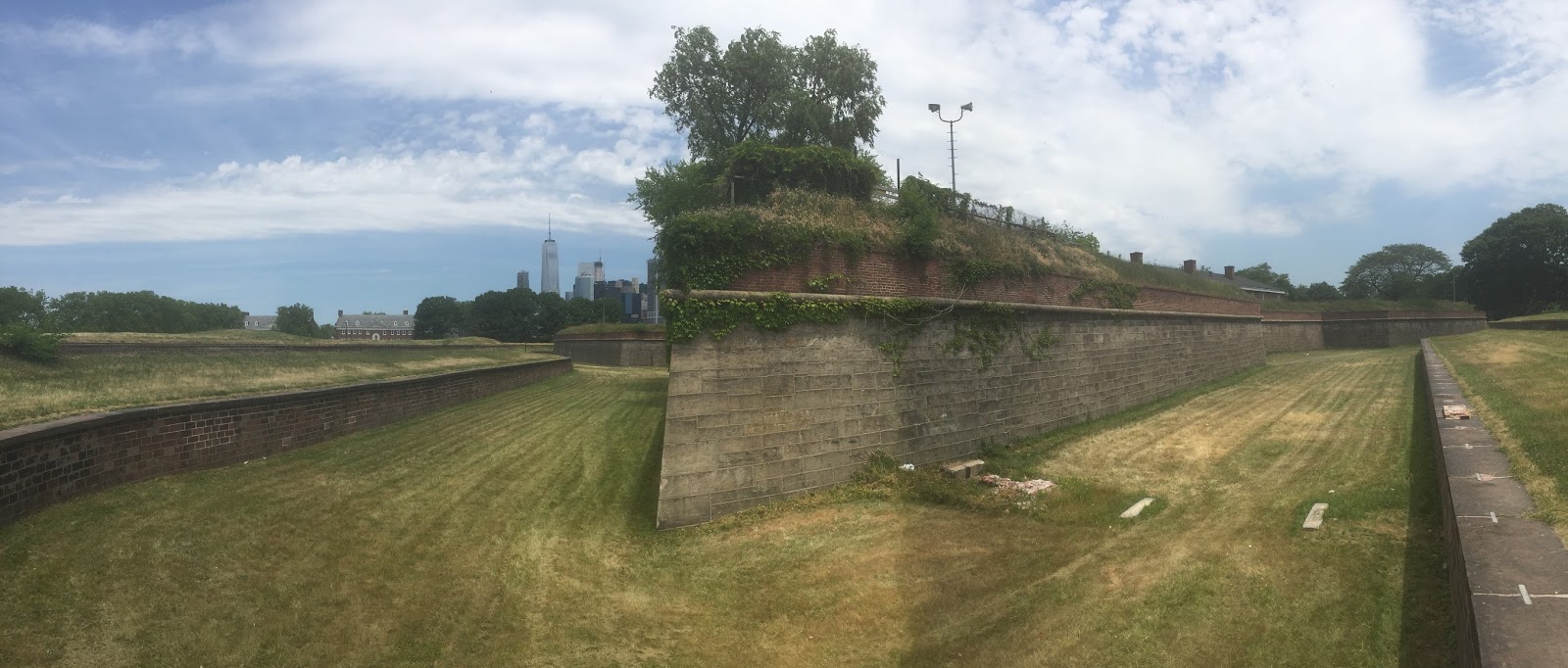
Dry Moat and Wall looking North...


One of my "off the beaten path" places in NYC!


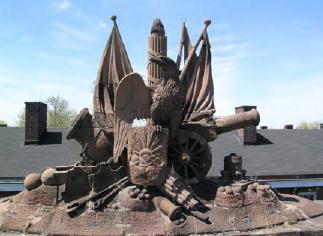
The Fort Jay Eagle above the Entrance


Thursday, July 14, 2016

Castle Williams


Castle Williams built between 1807-1811, is a circular cannon fortification made of red sandstone on 
the west point of Governors Island just south of  Lower Manhattan.  The "castle" was part of a larger defense system to protect New York City at the mouth of the Hudson River.  This system also included Fort Jay, the South Battery (also on Governors Island), Castle Clinton (at the tip of Manhattan), Fort Gibson (on Oyster Island...which became Ellis Island), and Fort Wood (at Bedloe's Island...the current home of Lady Liberty). These forts and battery systems helped protect New York from British interference with the American shipping industry and became an integral reason why the British chose not to attack NYC during the War of 1812.


Inside Castle Williams: Summer 2016


But, most interesting to me was Castle Williams role during the Civil War...

At times, there were over 1,000 Confederate enlisted soldiers held prisoner at Castle Williams. Conditions were horrendous (this was purposeful...to match the conditions of Union prisoners in Confederate prisons) with packed conditions, no heat, no running water, no beds, rampant disease, and 24/7 confinement.


Castle Williams...well worth the $2 ferry ride!


Me @ Castle Williams on Governors Island


Tuesday, July 12, 2016

Paggank


Governors Island


For just $2 you can take a 5 minute ferry ride to Governors Island and a walk through history!

Governors Island (called Paggank or "Nut Island" by the "First Nations" before being crushed by European occupation) is a 172 acre island less than half a mile off of the southern tip of Manhattan.

My wife and I intended to go to the island to take panoramic shots of Manhattan and the Brooklyn Bridge from arguably one of the most beautiful vantage points in NYC and unexpectedly we discovered a relatively quiet oasis of exciting "off the beaten path" history.


Lower Manhattan from Governors Island


These are some of the "discoveries" we made:


In 1624 the Dutch used Governors Island as the first landing place of settlers in New Netherlands Territory, making Governors Island the birthplace of New York and New Netherlands their first military base.

Governors Island was originally 69 acres and expanded to 172 acres in 1912 using materials excavated (nearly 5 million cubic yards of rock and soil) from the building of New York City's first subway line.

The oldest structure still standing on the island is "The Governors House" built (according to some sources) circa 1703.

During the Revolutionary War the Continental (American) Army fortified the island with an earthworks fort and 40 cannons, in anticipation of a British attack on NYC.

In 1794, Fort Jay (the subject of an upcoming post) was built on the site of the previous earthworks fort that was laying in ruins.


A moat surrounds Fort Jay


From 1807-1811, Castle Williams (the subject of an upcoming post) was built on the northwest corner of the island as part of a movement to fortify American ports from foreign invasions...both forts (and others in the area) proved very useful during the War of 1812.


Castle Williams


During the Civil War, the forts were used as an administrative site for Union officers and to house Confederate prisoners of war.

After the Civil War, Governors Island was used as a military prison (the east coast version of Alcatraz).


Civil War Rodman Cannon at Fort Jay


Thankfully, 22 acres of the island have been declared a National Historical Monument preserving an important part of history (and the ability to critically think about history) forever.





Friday, July 8, 2016

James Baldwin and July


"To be a Negro in this country and to be relatively conscious is to be in rage almost all the time."


"Not everything that is faced can be changed.  But nothing can be changed until it is faced."


"Love takes off the masks that we fear we cannot live without and know we cannot live within." 


"I know you didn't do it, and I didn't do it either, but I am responsible for it because I am a man and a citizen of this country and you are responsible for it, for the very same reason."


"Somebody, your father or mine, should have told us that not many people have ever died of love.  But multitudes have perished, and are perishing every hour - and in the oddest places - for the lack of it!"


"If I love you, I have to make you conscious of the things you don't see."


"Love is a battle.  Love is a war.  Love is a growing up."